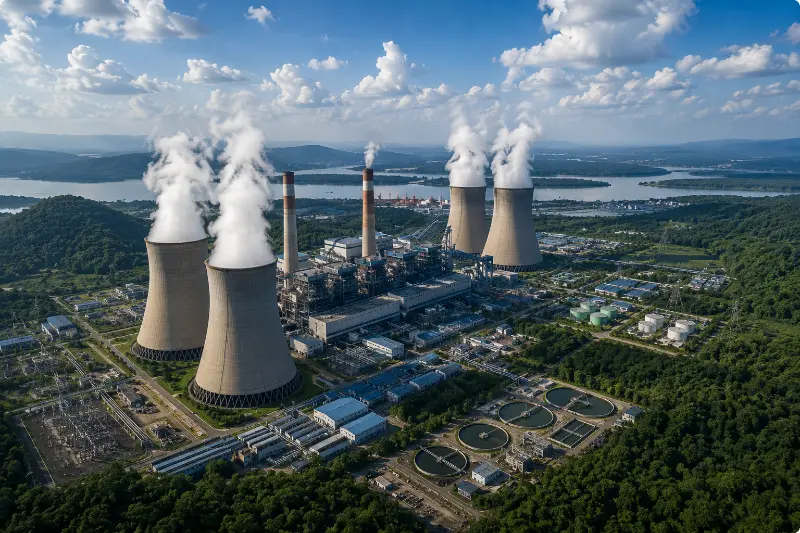
TREE Green Solutions helps industries and organisations measure, audit, and report their environmental and greenhouse gas emissions data. This includes carbon footprint assessment, GHG emission estimation, product carbon footprint, transport emissions, and water audits — covering on-field inspection, leakage detection, consumption analysis, and conservation reporting for railway stations, industries, and infrastructure facilities.
Our sustainability services are designed to meet compliance requirements as well as global market demands, aligned with the following international and Indian standards:

ISO 14064 — GHG Emission Estimation for Organisations and Projects
ISO 14083 — Transport GHG Emissions
EU CBAM Regulations
ISO 14067 — Product Carbon Footprint
GRI (Global Reporting Initiative)
BRSR (Business Responsibility and Sustainability Report)
TCFD (Task Force on Climate-related Financial Disclosures)
ISO 46001:2019 — Water Efficiency Management
ISO 14046 — Water Footprint
Alliance for Water Stewardship (AWS)
NBC 2016 (National Building Code)
IGBC (Indian Green Building Council)
CGWA (Central Ground Water Authority)
An environmental audit is a systematic assessment of an organisation's environmental performance. It involves collecting data on key environmental parameters for the year and benchmarking them against global and national reporting standards.

Energy consumption
Water consumption and wastewater generation
Emissions
Waste generated, used, and disposed
Data for each environmental parameter — energy, water, wastewater, emissions, and waste — is collected from the organisation for the reporting year. The collected data is analysed and structured based on the applicable reporting framework

GRI (Global Reporting Initiative) — international standard for sustainability disclosure
BRSR (Business Responsibility and Sustainability Report) —Indian standard mandated by SEBI for listed companies
A comprehensive environmental report is prepared covering the organisation's environmental performance, disclosures, and areas for improvement.

Vadodara, Gujarat
GRI-based environmental audit and sustainability reporting. Environmental parameters including energy, water, wastewater, emissions, and waste data were collected for the reporting year and structured into a GRI-compliant sustainability disclosure report.
A water audit is a detailed on-field assessment of water sources, supply systems, consumption patterns, and losses within a facility or infrastructure system. It identifies inefficiencies, leakages, and opportunities for water saving and conservation.
Data for each environmental parameter — energy, water, wastewater, emissions, and waste — is collected from the organisation for the reporting year. The collected data is analysed and structured based on the applicable reporting framework
On-site inspection of all water sources, supply lines, storage systems, and end-use points within the facility or station.
Identification and quantification of leakages across the water supply network.
Water usage and supply data is collected using the previous year supply and consumption records. Patterns, anomalies, and inefficiencies are identified through analysis.
A detailed water audit report is prepared with findings, analysis, and specific recommendations for water saving and conservation measures.
NBC (National Building Code)
IGBC (Indian Green Building Council)
CGWA (Central Ground Water Authority)
Following a water audit, accurate measurement and monitoring are essential for implementing audit recommendations and improving water management. We provide water meter installation services at key locations within the water distribution system to track consumption, assess water losses, establish water balance, and support effective conservation and efficiency measures.
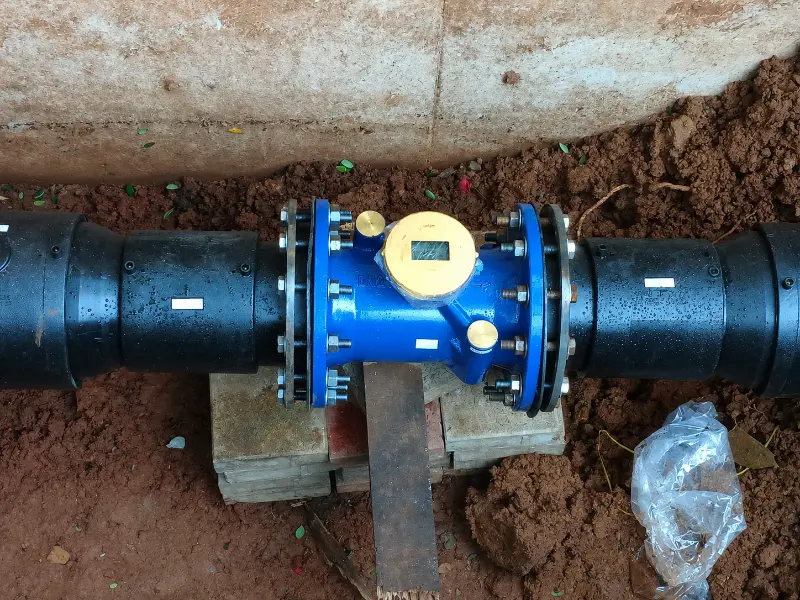
Hubballi, Karnataka
Water meters installed for Ground Level Reservoirs (GLRs) and Overhead Tanks (OHTs) across railway stations and colonies of the South Western Railways (SWR) zone at Hubballi, enabling accurate monitoring of water supply and consumption across the railway network.
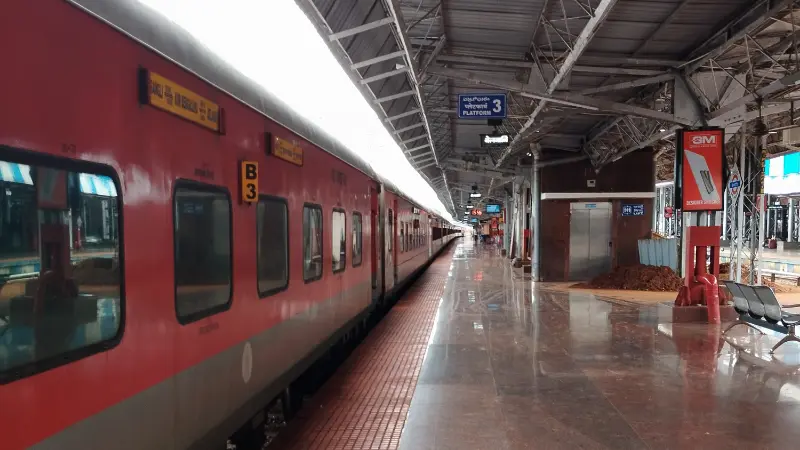
Hubballi, Belagavi, Bagalkot, Vijayapura, Goa
Water audits conducted at multiple railway stations across the SWR zone. On-field inspection, leakage detection, water usage data collection, and conservation reporting carried out at each station.
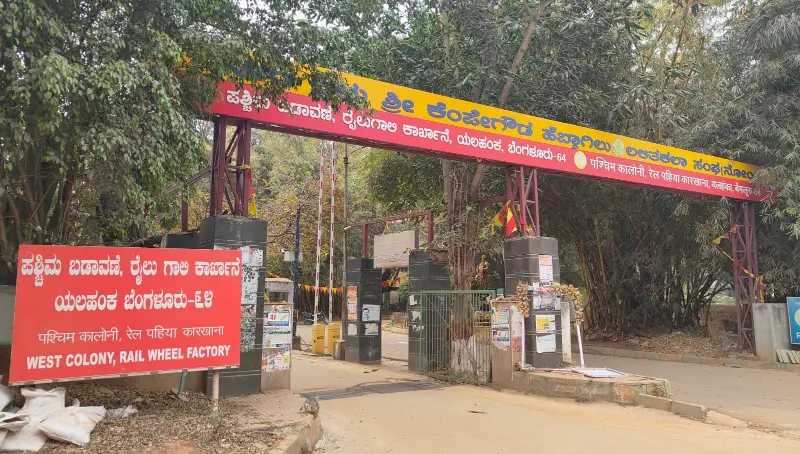
Yelahanka, Bengaluru
Water audit for a large-scale Indian Railways manufacturing facility. Supply and consumption data analysis, leakage assessment, and water conservation recommendations were provided.
A carbon footprint is the total quantity of greenhouse gases emitted directly or indirectly by an organisation through its production and operational activities over a year. It is expressed in tonnes of CO₂ equivalent (tCO₂e).
Carbon Dioxide (CO₂)
Nitrous Oxide (N₂O)
Methane (CH₄)
Emissions from direct combustion of fuel within the facility — furnaces, boilers, kilns, generators, and vehicles owned by the organisation.
Indirect emissions arising from electricity consumed by the organisation. Emissions are attributed to the consuming industry based on the grid emission factor.
Indirect emissions from waste generated at the facility, business and employee travel, inbound transportation of raw materials, and outbound transportation of finished goods.
The following data is collected from the organisation for the assessment year
Annual production volumes
Energy consumption (electricity units)
Fuel consumption (diesel, coal, LPG, natural gas)
Transportation data — inbound and outbound
Travel data — business and employee travel
Waste generation data
Collected activity data is multiplied by internationally accepted emission factors to convert each activity into CO₂ equivalent emissions. Scope 1, Scope 2, and Scope 3 emissions are calculated separately and then totalled.
Total annual GHG emissions of the organisation (tCO₂e)
CO₂ emission intensity per unit of annual production
Scope-wise emissions breakdown
Hotspot identification and reduction recommendations

Khopoli, Maharashtra
Carbon footprint assessment covering Scope 1, Scope 2, and Scope 3 emissions for steel manufacturing operations. Total emissions and emission intensity per tonne of steel produced were calculated and reported.
The Carbon Border Adjustment Mechanism (CBAM) is a regulation by the European Union that places a carbon price on certain goods imported into the EU. Indian manufacturers exporting to the EU must provide verified embedded carbon emissions data for their products. Without this, EU buyers face higher costs and may shift to suppliers who can provide it.
Data for each environmental parameter — energy, water, wastewater, emissions, and waste — is collected from the organisation for the reporting year. The collected data is analysed and structured based on the applicable reporting framework
Energy consumption and fuel consumption data from the manufacturing facility is collected for the Previous production period. Where raw materials are sourced from external suppliers, embedded emissions data from those suppliers is also gathered.
Collected data is entered into the predefined reporting template prescribed by the European Commission. Direct and indirect embedded emissions are calculated per unit of product.
Water usage and supply data is collected using the previous year's supply and consumption records. Patterns, anomalies, and inefficiencies are identified through analysis.
Specific Embedded Emissions — total GHG emissions embedded in one tonne of the exported product
Emission Intensity — emissions per unit of production
Khopoli, Maharashtra
Carbon footprint assessment covering Scope 1, Scope 2, and Scope 3 emissions for steel manufacturing operations. Total emissions and emission intensity per tonne of steel produced were calculated and reported.

Gandhinagar, Gujarat
CBAM compliance support for stainless steel products exported to EU markets. Production and supplier raw material emissions data were processed through the European Commission reporting template and quarterly CBAM reports were prepared for EU importers.

Gangavati, Karnataka
Executed the preparation of a Detailed Project Report (DPR) for a legacy waste remediation project, covering land survey, waste quantification (in m³ and MT), waste characterization, and planning of biomining and bioremediation activities. The DPR was developed in compliance with CPCB guidelines and NGT Orders 386/2019 and 519/2019, for a municipal solid waste landfill within Gangavati CMC limits.

Hyderabad ,Telangana, India
Developed a Sustainability Management Plan for reclamation works, focusing on low-carbon material sourcing, sustainable construction practices, and greenhouse gas emission monitoring enhancing overall project sustainability and carbon footprint monitoring throughout the project.
Engineering design and management of water systems for industries, hotels, hospitals, and urban infrastructure.
Environmental assessment and ecosystem restoration for sites affected by industrial activity, natural disasters, and infrastructure development.
Building design, cost estimation, and project cycle management for funded infrastructure and community projects.
Whether you need a certified carbon footprint assessment, CBAM compliance support, or a complete environmental engineering solution our team is ready to help.